Fire Watch Services in Texas: NFPA Compliance and Fire Marshal Requirements
When fire watch is legally required in Texas and how to stay compliant with local fire marshals
Fire Safety Director at PrimeGuards
16 years in fire watch and life safety compliance across Texas, former fire prevention officer for major Houston hospital system, Certified Protection Officer
Fire watch is not optional in Texas. When your fire alarm system fails, your sprinkler system goes offline, or your building undergoes construction that impairs fire protection, the law requires trained personnel to patrol the property continuously until systems are restored. Texas fire watch requirements vary by jurisdiction. Houston Fire Department enforces aggressively. Dallas Fire Rescue has specific amendments. Austin has university specific protocols. San Antonio focuses on hospitality compliance. Every city has its own Authority Having Jurisdiction, known as the AHJ, who decides what compliance looks like at your address.
This article explains when fire watch is required, what the standards say, how each major Texas city enforces them, and what professional fire watch guards must do to keep your building legal and your occupants safe.
When Texas Properties Need Fire Watch
Fire watch is triggered by specific conditions. Knowing them helps you respond before the fire marshal arrives with a citation.
Fire alarm or sprinkler system impairment is the most common trigger. When a required fire alarm system is out of service for more than 4 hours in a 24 hour period, fire watch is mandatory. When a required water based fire protection system like a sprinkler is out of service for more than 10 hours in a 24 hour period, fire watch is mandatory. These time limits come from NFPA 72 for alarm systems and NFPA 25 for sprinkler systems. Many Texas cities have adopted stricter local amendments that require faster response. The general rule is that the most stringent requirement applies. If your city requires fire watch within 2 hours and NFPA allows 4 hours, you follow your city’s rule.
Hot work operations including welding, cutting, grinding, and torch work create fire risks that fall outside normal sprinkler coverage. NFPA 51B and OSHA standards require a dedicated fire watch observer during hot work and for a minimum of 30 minutes after operations cease. Smoldering materials can reignite well after the visible flame is gone. This is not a suggestion. It is a code requirement that inspectors enforce actively on construction sites across Texas.
Construction sites with combustible materials require fire watch under International Fire Code Section 3304.5. The code requires fire watch personnel whenever temporary heating devices are used, during welding and cutting operations, and in buildings exceeding 40 feet in height during construction. Fire watch logs must be maintained on site and made available to fire code officials upon request. Records must be retained for a minimum of one year following project completion.
Special events with pyrotechnics or open flames may require temporary fire watch coverage. Large events such as trade shows, concerts, or festivals in venues with impaired systems or non sprinklered spaces need fire watch to ensure crowd safety and hazard prevention. The AHJ for the event venue makes this determination during the permitting process.
High rise buildings with system outages face elevated fire watch requirements. High rise buildings have complex evacuation challenges, limited fire department access, and large occupant loads. A fire alarm impairment in a 30 story building creates a life safety emergency that standard fire watch protocols may not address. Houston Fire Department enforces particularly strict high rise fire watch rules with patrol frequency tied to risk level and detailed documentation requirements.
Healthcare facilities with system maintenance require fire watch because patients cannot evacuate quickly. Hospitals, nursing homes, and assisted living facilities have occupants who are bedridden, on ventilators, or undergoing surgery. A fire alarm or sprinkler impairment in a healthcare facility requires immediate fire watch with patrols that cover patient care areas, electrical rooms, storage spaces, and mechanical areas. The fire watch must continue until the system is restored and verified by a licensed technician.
Texas Fire Watch Standards
Texas fire watch operates under a layered regulatory framework. Understanding the layers helps you navigate compliance.
NFPA 101 Life Safety Code defines fire watch as the assignment of one or more people with specific tasks. These tasks include notifying the fire department and building occupants of an emergency, preventing a fire from occurring, extinguishing small fires, and protecting the public from fire or life safety dangers. NFPA 101 requires that fire watch personnel have no other responsibilities than circulating through the affected area and looking for signs of fire. They must check that fire escapes, exits, alarm systems, and other elements of the building’s fire safety system remain unobstructed, functioning, and available if needed. Cameras can supplement fire watch but cannot replace human staff. Cameras lack the senses of smell, hearing, and perception for conditions that may produce a fire.
NFPA 601 Standard for Security Services in Fire Loss Prevention establishes minimum standards for security personnel who perform fire watch duties. The standard covers training requirements, patrol procedures, documentation, and equipment. NFPA 601 recognizes that security officers often serve as the first line of fire detection in buildings with impaired systems. The standard requires that fire watch guards be trained in fire prevention, fire department notification techniques, and portable fire extinguisher operation.
International Fire Code Section 605.5 establishes requirements for fire protection system impairments. The code mandates that building owners notify the fire code official immediately when any fire alarm, sprinkler, or standpipe system becomes inoperative. Fire watch implementation must occur within the timeframes established by NFPA 25 and NFPA 72, with local amendments potentially requiring more stringent intervals. Many Texas jurisdictions modify this section to require fire watch notification to the fire department within 30 minutes of system impairment, significantly shorter than the NFPA 10 hour allowance.
International Fire Code Section 3304.5 specifically addresses fire watch requirements for construction and demolition sites. The code requires fire watch personnel whenever temporary heating devices are used, during welding and cutting operations, and in buildings exceeding 40 feet in height during construction. The standard mandates that fire watch logs be maintained on site and made available to fire code officials upon request, with records retained for a minimum of one year following project completion.
Texas Administrative Code references fire watch through the State Fire Marshal’s Office, which sits within the Texas Department of Insurance. The SFMO adopts NFPA standards by reference for contractor licensing. The SFMO governs alarm contractor registration, sprinkler contractor registration, and extinguisher contractor registration. However, the SFMO does not typically perform local building inspections. That is the local fire marshal’s role. In Texas, if your city or county has a certified fire inspector, the SFMO will not inspect. You must work with your local AHJ for inspection, permitting, and remediation.
Local fire marshal authority is the most important layer. Houston, Dallas, Austin, San Antonio, Fort Worth, and every other Texas city with a certified fire inspector acts as its own AHJ. Each city can adopt the IFC with local amendments that are stricter than the state or national standard. The general rule is that the most stringent requirement applies. If your local fire marshal requires 15 minute patrols when NFPA allows 60 minutes, you follow the local rule. If your local fire marshal requires fire watch to begin within 2 hours when NFPA allows 4 hours, you follow the local rule. The AHJ maintains significant discretion to establish site specific fire watch requirements based on local conditions.
Patrol frequency varies by jurisdiction and risk level. NFPA standards and the IFC establish minimum intervals, but local fire marshals often require more frequent patrols. Minimum intervals range from every 15 minutes in high risk occupancies to every 60 minutes in lower risk settings. The AHJ determines the specific interval based on building type, occupancy load, ignition risks, and the nature of the impairment. A high rise hospital with a sprinkler impairment may require 15 minute patrols. A single story warehouse with an alarm impairment may require 30 minute patrols. The only way to know your required interval is to ask your local fire marshal.
Documentation requirements are universal. Every fire watch log must include the date and specific times when coverage began and ended, the printed name and signature of each fire watch guard, exact timestamps for each patrol completed showing the zone or area inspected, specific hazards identified during patrols and corrective actions taken, weather conditions for outdoor patrols, any incidents including smoke detection or fire department notification, and supervisor sign offs verifying review of the shift. Logs must be completed in permanent ink, never pencil. They must be retained for 1 to 3 years depending on jurisdiction. They must be available for fire marshal inspection at any time. Even a single missing entry may result in a citation.
Fire Watch by Texas City
Each major Texas city has its own fire watch enforcement profile. Understanding the differences helps you comply no matter where your property is located.
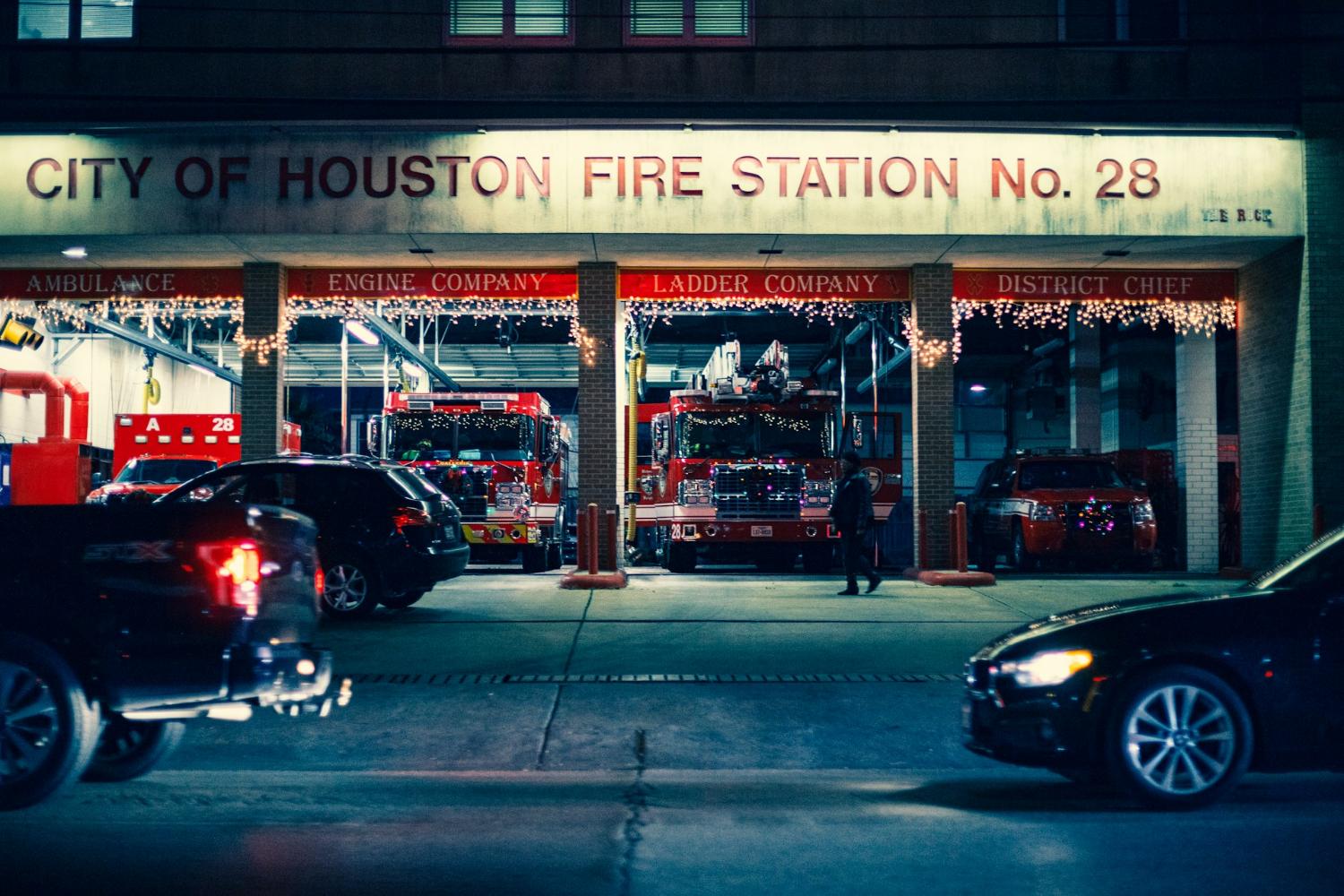
Houston Fire Department enforces strict high rise and industrial standards. The Fire Marshal’s Office requires detailed documentation, and patrol frequency is tied to risk level. Guards are expected to check affected areas at least once every hour, and every 30 minutes if conditions increase the chance of ignition. Patrols must be logged in the approved format, and the logbook can be reviewed without notice. Even a single missing entry may result in a citation. When a fire alarm or sprinkler system fails, the building owner must notify HFD within 24 hours. Written notice must be given to the property owner and the Fire Marshal’s Office within 3 business days. Notifications can be made by phone, fax, or email. Houston also enforces aggressively on egress and emergency lighting, fire alarm monitoring and permits, and flammable liquids storage violations. The Houston Fire Marshal’s Office is the AHJ for all properties within Houston city limits. PrimeGuards provides fire watch services in Houston with guards trained in HFD protocols and documentation standards.
Dallas Fire Rescue introduced amendments in 2019 that allow property owners to use qualified private personnel rather than hiring only off duty firefighters. Private standby staff must meet specific criteria. They must be at least 21 years old, physically fit to cover full patrol routes, trained in the proper use of fire extinguishers, able to patrol the entire property, and available for patrol during required watch periods. They must also meet all written compliance requirements listed by the city. Dallas Fire Rescue as the AHJ may require patrols as frequent as every 15 minutes based on site conditions or impairment type. Dallas also mandates annual inspections of fire protection systems and requires licensed technicians for service and installation under Texas SFMO certification. The Dallas Fort Worth metroplex is regulatorily fragmented. Dallas, Fort Worth, Plano, Arlington, and Irving each have their own AHJ requirements beyond NFPA and SFMO minimums. PrimeGuards provides fire watch services in Dallas with guards who meet DFR private personnel standards.
Austin’s approach is more concerned with the speed of response when an impairment occurs. A fire watch must begin within a short window after a system goes offline or when a shift changes. At the University of Texas at Austin, the standard is specific. Where a required fire alarm system is out of service for more than 4 hours in a 24 hour period, Fire Prevention Services must be notified, the building evacuated, or an approved fire watch provided for all areas left unprotected. Where a required water based fire protection system is out of service for more than 10 hours in a 24 hour period, the same requirements apply. The fire watch must be performed for the entire duration of the outage, including lunches, breaks, and any lag time between completion of work and restoration of the system. The assigned guard must carry at least two methods of communication, such as a mobile phone and a two way radio, to maintain contact with emergency services. Austin is also actively adopting wildland urban interface code for properties in fire hazard severity zones around the Hill Country. PrimeGuards provides fire watch services in Austin with guards trained in Austin Fire Department protocols.
San Antonio’s regulations focus on the hospitality and tourism sector, where hotels are required to maintain detailed logs to protect their guests. The San Antonio Fire Department enforces fire watch requirements for hotels, attractions, and event venues with large transient populations. Local requirements reflect county oversight in Bexar County, which outlines expectations for hotel properties and other high occupancy sites. The assigned guard is expected to carry at least two methods of communication to maintain contact with emergency services. Fiesta San Antonio, with its 11 day citywide celebration and millions of attendees, creates temporary fire watch demands across dozens of venues simultaneously. The San Antonio Fire Department coordinates closely with event organizers and private security during major events. PrimeGuards provides fire watch services in San Antonio with guards familiar with SAFD hospitality protocols.
Fort Worth operates under the Dallas Fort Worth regulatory fragmentation. The Fort Worth Fire Department is the AHJ for Fort Worth properties and may have amendments that differ from Dallas. El Paso Fire Department enforces fire watch requirements for properties near the border with specific considerations for industrial and logistics facilities. Corpus Christi Fire Department oversees port and refinery adjacent properties with marine terminal fire watch requirements that may overlap with Coast Guard regulations. In every city, the local fire marshal is the AHJ. The only way to know your specific requirements is to contact your local fire prevention bureau. Do not assume that Houston rules apply in Fort Worth or that Dallas rules apply in El Paso. Each city has its own amendments, its own inspection schedule, and its own enforcement priorities.
What Texas Fire Watch Guards Must Do
Fire watch is not a security guard standing in the lobby. It is a specific set of duties performed by trained personnel who have no other responsibilities during the watch.
Continuous patrol of all building areas is the core duty. The guard must walk every affected floor, every corridor, every storage room, every mechanical space, and every exterior area included in the impairment plan. The patrol must follow a defined route with checkpoints. The guard must check for fire, smoke, heat, unusual odors, and any condition that could lead to ignition. They must verify that fire exits are unobstructed and accessible, that fire extinguishers are functional, charged, and within 30 feet of their patrol route, and that standpipes, hose cabinets, and emergency lighting are available if needed.
Documentation of every patrol is mandatory. The guard must record the exact time of each patrol, the areas inspected, any hazards observed, and any corrective actions taken. The log must be completed in permanent ink. It must be available for fire marshal inspection at any time. Digital logging systems using NFC tags, QR codes, or GPS verification are increasingly accepted by Texas fire marshals. These systems create tamper proof records that prove exactly when each area was inspected. PrimeGuards utilizes enterprise grade logging platforms that store records for a minimum of one year, exceeding most jurisdiction retention requirements.
Immediate 911 response upon detection is required. If the guard sees smoke, fire, or any condition that indicates an active fire emergency, they must call 911 immediately. They must not wait for a supervisor, building management, or anyone else. They must not try to handle the situation alone if it is beyond a small incipient fire. The guard must then notify building management and begin evacuation procedures if the situation warrants. They must direct arriving fire apparatus to the correct location and provide information about the impairment, the building layout, and any occupants who may need assistance.
Coordination with building management and fire marshals is ongoing. The guard must report any hazard to building management immediately. They must provide status updates to the fire marshal if requested. They must maintain communication with the impairment coordinator who is managing the repair schedule. They must remain on post until the system is restored and verified by a licensed technician. Leaving early is a violation. Leaving for lunch without coverage is a violation. Leaving for a bathroom break without relief is a violation. The fire watch must be continuous.
Equipment requirements are specific. Every fire watch guard must have immediate access to at least one portable fire extinguisher rated 2A10BC minimum. This rating indicates capability to handle ordinary combustibles, flammable liquids, and electrical fires. Extinguishers must be fully charged, recently inspected within 12 months, and located within 30 feet of the guard’s patrol route. Guards must carry working two way radios, cellular phones, or building intercom systems providing direct connection to emergency services, building management, and fire department dispatch. Many jurisdictions now require dual communication methods. A primary radio for building contact plus a personal cell phone for 911 backup. Guards must carry high intensity flashlights for inspecting dark areas, checking above ceilings, and navigating buildings during power outages. In construction environments, guards must wear high visibility vests identifying the wearer as FIRE WATCH. In industrial settings, guards may require safety glasses, hearing protection, or flame resistant clothing depending on specific hazards present.
Hiring Compliant Fire Watch in Texas
Not every security guard can perform fire watch. Texas requires specific qualifications, training, and capabilities.
Verify NFPA training. Fire watch guards must be trained in fire prevention, fire department notification techniques, and portable fire extinguisher operation. They must understand the building’s fire safety systems, evacuation routes, and emergency procedures. General security training is not sufficient. Ask the security company for documentation of fire watch specific training. Ask for the curriculum, the instructor’s credentials, and training completion certificates for the guards who will be assigned to your property.
Check local fire marshal familiarity. A fire watch guard who does not know your local fire marshal’s requirements is a liability. The guard must understand the patrol frequency, the documentation format, the notification procedures, and the communication protocols that your specific AHJ requires. A guard trained for Houston may not know Dallas amendments. A guard trained for Austin may not know San Antonio hospitality requirements. Ask the security company if their guards have worked in your city before, if they have relationships with your local fire prevention bureau, and if they have been through inspections with your fire marshal.
Confirm documentation capabilities. The security company must provide logs that meet your AHJ’s format requirements. Some fire marshals require specific log templates. Some require digital logs with timestamp verification. Some require supervisor sign offs on every shift. Ask the security company to show you a sample log from a previous fire watch assignment in your city. Compare it to the format your fire marshal requires. If the formats do not match, the company is not ready for your assignment.
Emergency deployment availability is critical because fire watch needs often arise unexpectedly. A sprinkler pipe bursts at 2 AM. A fire alarm panel fails on a Friday evening. A construction crew needs hot work coverage on a Saturday. The security company must be able to deploy qualified guards within hours, not days. Ask about their emergency response time, whether they have guards on standby for after hours and weekend deployments, and whether they can provide coverage for extended impairments that last days or weeks. A company that needs 48 hours to find a guard is not an emergency fire watch provider.
Frequently Asked Questions
No. While technology can supplement fire watch, current fire codes universally require human personnel to perform fire watch duties. Digital logging systems using NFC tags, QR codes, or GPS tracking can verify that patrols occur on schedule and create tamper proof documentation. Thermal imaging cameras and temporary smoke detectors may assist guards in detecting fire conditions. However, none of these technologies can replace the human judgment, decision making capability, and physical intervention ability required by NFPA 101 and NFPA 601. A camera can detect smoke but cannot wake a sleeping occupant, carry a disabled patient down stairs, or operate a portable fire extinguisher.
Fire watch lasts for the entire duration of the impairment. For a fire alarm system repair that takes 6 hours, the fire watch lasts 6 hours. For a sprinkler system renovation that takes 2 weeks, the fire watch lasts 2 weeks. There is no maximum duration. The watch continues 24 hours a day, 7 days a week, until the system is restored and verified by a licensed technician. Extended impairments require shift changes, supervisor oversight, and careful documentation to maintain compliance.
The property owner or building manager is responsible for providing fire watch. Not the contractor performing the repair. Not the alarm company servicing the panel. The owner. If you hire a security company to provide fire watch, you are delegating the task but not the responsibility. You must verify that the guards are qualified, the documentation is complete, and the fire marshal is notified. Liability remains with the owner if the fire watch fails.
Consequences include fines and citations from the fire marshal, building closure until compliance is achieved, increased insurance premiums or denial of claims, and legal liability if a fire occurs during an unmonitored impairment. In Texas, owners and occupants who disable fire protection systems may be held civilly and criminally liable for loss, damage, or injury resulting from system impairment. The penalties are serious because the stakes are life safety.
It depends on your jurisdiction. NFPA allows up to 4 hours for fire alarm impairments and 10 hours for sprinkler impairments. Many Texas cities have adopted stricter local amendments. Houston requires notification within 24 hours and written notice within 3 business days. Dallas may require fire watch within hours. Austin requires immediate action for alarm impairments exceeding 4 hours. The only way to know your specific timeline is to contact your local fire marshal immediately when the impairment occurs. Do not wait to research. Call the fire prevention bureau and ask.
Fire watch in Texas is a legal requirement, not an optional precaution. When your fire alarm fails, your sprinkler goes offline, or your construction project impairs fire protection, trained personnel must patrol your property continuously until systems are restored. The regulatory framework includes NFPA 101, NFPA 601, NFPA 25, NFPA 72, the International Fire Code, Texas Administrative Code, and local amendments enforced by your city’s fire marshal. The most stringent requirement applies. The property owner is responsible for compliance.
PrimeGuards provides fire watch services across Texas. We deploy trained guards in Houston, Dallas, Austin, and San Antonio who understand local fire marshal requirements. We provide digital logging with timestamp verification. We retain records for a minimum of one year. We carry the required equipment. We can deploy within hours of your call. Contact PrimeGuards for emergency fire watch or scheduled fire watch coverage. We protect your property, your occupants, and your compliance standing.
Emergency fire watch deployment available 24/7.